
If your workweek includes both Zoom calls and train rides, where you buy matters more than ever. You are not just shopping for square footage in Natick. You are also choosing a commute pattern, a work-from-home setup, and a day-to-day routine that needs to feel manageable. This guide will help you think through Natick’s housing options, transit access, walkability, and lifestyle tradeoffs so you can buy with more clarity. Let’s dive in.
Why Natick Fits Hybrid Buyers
Natick offers a mix that appeals to both commuters and remote workers. The town has about 37,000 residents, an owner-occupied housing rate of 68.2%, and a mean travel time to work of 30.7 minutes. For buyers who work from home at least part of the week, townwide connectivity is also a real plus, with 94.0% of households reporting a broadband subscription and 97.8% reporting a computer.
Natick is also a high-price suburban market, so planning matters. Recent market data showed a typical home value of $911,380, a median sale price of $848,500, a median list price of $988,800, and a median days-to-pending figure of 7. In plain terms, that means you may need to move quickly when the right home hits the market.
Understand Natick’s Housing Mix
Your best fit in Natick often comes down to how you want to live during the workweek. Do you want space to spread out, or do you want a lower-maintenance home near transit and downtown amenities? Natick can support both, but not always in the same location or property type.
About 61% of Natick’s 14,459 housing units are detached single-family homes. That matters because single-family homes usually offer the most flexibility for buyers who want a dedicated office, extra storage, a basement, a garage, or more parking.
Single-Family Homes for Flexibility
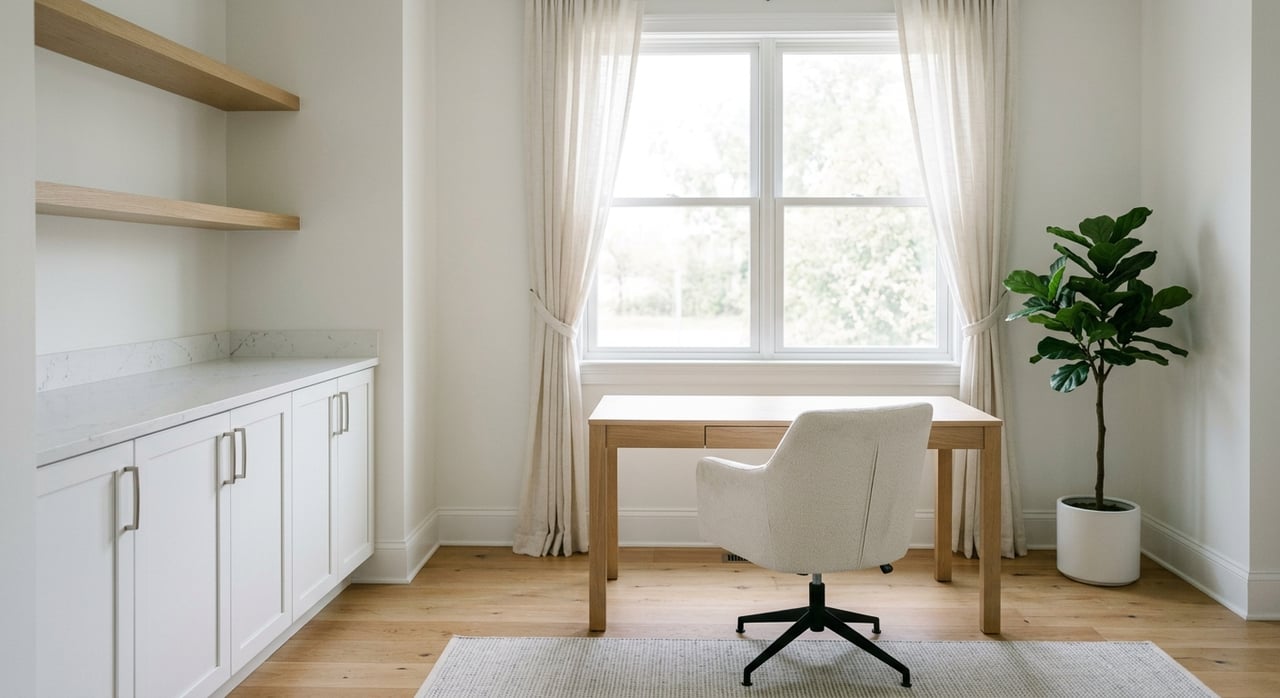
If you work from home several days a week, a single-family home may give you the easiest path to a comfortable setup. You are more likely to find space for a true office, guest room, workout area, or a quieter place for calls. That kind of flexibility can make a big difference over time.
Natick’s accessory dwelling unit rules also add another layer of value for some buyers. The town allows ADUs as of right, permits them to be rented, and does not allow them to be used as short-term rentals. Natick also cannot require off-street parking for an ADU within a half-mile of an MBTA commuter rail station, which may make certain properties near rail stops more adaptable over time.
For some buyers, that could support multigenerational living, a separate studio or office, or future rental income. It does not mean every home will be the right fit, but it does give you another lens to use when evaluating a purchase.
Compact Homes and Low-Maintenance Living
If your priority is convenience, a smaller-footprint home near downtown may make more sense. Natick Center includes examples of mixed-use and compact housing that support lower-maintenance living near services and transit. The town highlights newer developments such as Natick Corner and Union Place as examples of this more downtown-oriented housing pattern.
This type of setup can work well if you want to walk to coffee, the library, restaurants, or the train. It can also be attractive if you commute a few days a week and prefer to spend less time maintaining a larger property.
Natick Center vs West Natick
For many buyers, this is the key decision. Both Natick Center and West Natick offer access to the MBTA Framingham/Worcester Commuter Rail Line, but they support different lifestyles.
Both stations are in Fare Zone 4, and the line runs between Boston’s South Station and Worcester’s Union Station. If rail access is part of your weekly routine, comparing these two areas carefully can save you a lot of stress later.
Natick Center for Walkability
Natick Center is usually the better fit if you want a more walkable daily routine. The station reopened in August 2025 with accessibility upgrades that include elevators, ramps, high-level platforms, bicycle parking, improved wayfinding, and a trail connection.
Beyond the station itself, downtown Natick serves as a lifestyle anchor. The Natick Center Cultural District describes the area as a place with arts, shopping, restaurants, and entertainment, which gives you more to do within a compact area.
This can be a strong match if you want to mix rail commuting with errands, library visits, dining out, or a short walk after work. It is also one of the better options in town if you value a less car-dependent routine.
West Natick for Park-and-Ride Ease
West Natick is often a practical choice for buyers who expect to drive to the station. The station has a 178-space adjacent lot, with weekday daily parking at $6 and monthly parking at $105.
If your ideal routine is to leave home, park, and get on the train without needing a highly walkable downtown setting, West Natick may be easier to use. For some buyers, that predictability matters more than being close to shops and restaurants.
Driving, Transit, and Mixed-Mode Commutes
Not every Natick buyer will use the commuter rail the same way. Some people will ride the train several times a week. Others will mix driving, shuttles, occasional rail trips, and remote work.
That is why location choice inside Natick matters so much. The town’s transportation planning notes that traffic is concentrated on Route 27, Route 135, Speen Street, and Route 9. If you expect to drive often, you should think carefully about how your likely routes line up with your work schedule.
Public Transit Beyond the Train
Natick’s transit options go beyond commuter rail. The town says Natick is also served by MWRTA fixed routes, shuttles, and on-demand service.
Examples include Route 1 linking the Natick Mall to the Woodland MBTA Green Line station, Route 9 linking the Natick Mall to Staples Corporate Offices, and shuttle service connecting Natick Center station with MathWorks campuses and hospital destinations. The town also notes that MWRTA services are currently fare free, and Catch Connect offers curb-to-curb service in Natick and Framingham during evenings and weekends.
If you like having backup transportation options, that can be helpful. It gives you more ways to piece together a workable weekly routine.
Biking and Trail Access
Biking can be realistic in parts of Natick, but it is not a townwide solution in the same way for every buyer. Natick Center station now includes bike parking and trail connections, and the Cochituate Rail Trail creates a useful non-car corridor.
The trail is a 3.7-mile ADA-accessible shared-use path connecting Natick Center to Saxonville and Framingham. The Eisenmenger Trail also connects downtown Natick to South Natick. If you want a midday walk, a stroller-friendly route, or an occasional bike-based errand or station trip, these trails are meaningful amenities.
At the same time, the town says bicycle facilities remain limited outside the trail network. So if biking is central to your routine, it is smart to focus closely on exact location rather than assuming the whole town will function the same way.
Remote Work Support in Natick
A good hybrid town needs more than internet service. It should also offer practical places where you can reset, focus, or work outside the house when needed.
Natick has solid basics for remote workers. High rates of broadband and computer access suggest that work-from-home infrastructure is strong across town.
The Library as a Backup Workspace
One of Natick’s most useful remote-work amenities is the Morse Institute Library. Located in downtown Natick, it offers free Wi-Fi, public computers, reading and study areas, meeting rooms, and business research resources.
That gives you a real fallback option when your home office feels stale, noisy, or crowded. For some buyers, that kind of nearby flexibility can make a home feel more functional, even if the square footage is not perfect.
Daily-Life Amenities Matter Too
Remote work is not just about where you sit with a laptop. It is also about whether your neighborhood supports breaks, errands, fresh air, and a routine that feels sustainable.
Natick Center stands out here because it combines transit access with downtown amenities. The area is also still evolving, with the Main Street Improvements project focused on pedestrian and bicycle safety, lighting, wayfinding, and streetscape design to support current and future downtown growth.
That means buyers near Natick Center should expect an active district that continues to change over time. For many people, that is a benefit. It can mean a more functional and appealing downtown experience in the years ahead.
How to Choose the Right Natick Setup
The best Natick home for you depends on how your week actually works, not just what sounds good during a showing. Try to picture your Monday morning, your midweek remote-work day, and your Friday errand run.
A few questions can help you narrow the search:
- Do you want to walk to the train, or are you comfortable driving and parking?
- Do you need a dedicated office, or can you work from a smaller flexible space?
- How important is easy access to restaurants, the library, and downtown services?
- Would trail access improve your daily routine?
- Do you want a lower-maintenance property, or do you need the flexibility of a single-family home?
If you answer those questions honestly, the right part of Natick often becomes much clearer.
Bottom Line on Buying in Natick
Natick works well for both commuters and remote workers, but it is not one-size-fits-all. Natick Center tends to suit buyers who want walkability, downtown amenities, and rail access in one place. West Natick often makes more sense for buyers who prefer a straightforward park-and-ride routine.
Single-family homes usually offer the most flexibility for hybrid living, while compact homes near downtown may better fit buyers who value convenience and lower maintenance. In a fast-moving market, having a clear picture of your commute style and home-office needs can help you make smarter decisions from the start.
If you are weighing Natick against other Greater Boston suburbs, or trying to decide which part of town fits your routine best, talking through the tradeoffs with a local advisor can save time and sharpen your search. When you are ready, connect with Mike Reece for thoughtful, data-informed guidance on buying in Natick and the surrounding suburbs.
FAQs
What makes Natick a good town for commuters and remote workers?
- Natick offers MBTA commuter rail access at Natick Center and West Natick, broad household broadband access, and practical work-friendly amenities like the Morse Institute Library.
Which Natick area is better for commuting to Boston?
- Natick Center is generally better if you want walkability and downtown access, while West Natick is often a better fit for buyers who prefer to drive and use station parking.
What type of Natick home works best for hybrid work?
- Single-family homes often offer the most flexibility for offices, storage, and adaptable space, while smaller downtown-oriented homes can work well if you prioritize transit access and lower maintenance.
How competitive is the Natick housing market?
- Recent market data showed a typical home value of $911,380, a median sale price of $848,500, and a median days-to-pending figure of 7, which points to a fast-moving market.
Is biking practical for homebuyers in Natick?
- Biking can be practical in select areas, especially near Natick Center and the Cochituate Rail Trail, but the town says bicycle facilities are still limited outside the trail network.
Are there good public places to work remotely in Natick?
- Yes. The Morse Institute Library in downtown Natick offers free Wi-Fi, public computers, study areas, meeting rooms, and business research resources.