
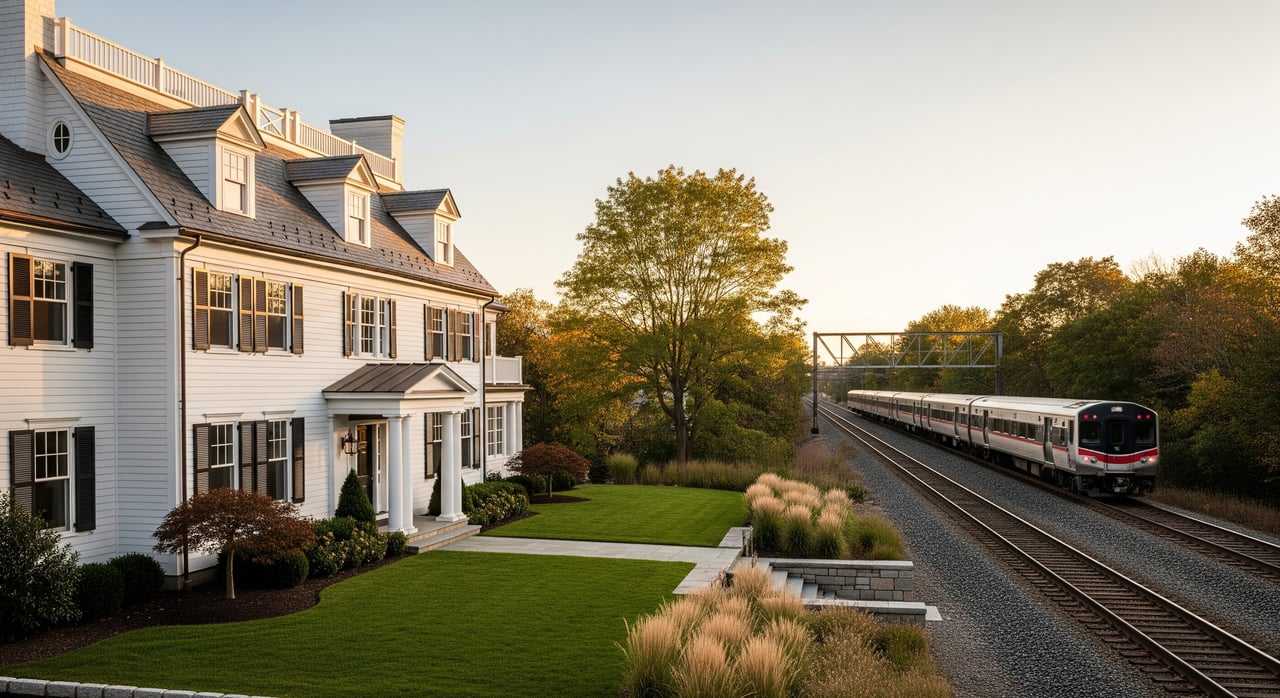
Does being able to walk to the MBTA station really add dollars to a home’s value in Natick and Greater Boston? If you commute to Boston or want flexible access to city amenities, that short walk, reliable service, and straightforward parking can feel priceless. In this guide, you will see how commuter rail access shows up in sale prices and time on market, how Natick Center compares with West Natick, and a simple framework to weigh access against budget. Let’s dive in.
Why rail access boosts value
Time and cost savings
Commuter rail can reduce your total travel time and the stress of driving. It also lowers out-of-pocket costs like gas, tolls, and downtown parking. When a home cuts both minutes and money from your commute, buyers tend to bid more for it.
Jobs and lifestyle reach
With a train option, your effective job market grows. You can consider roles in Boston and nearby job centers while living in Middlesex County communities such as Natick or Newton. That flexibility is valuable, even if you only commute a few days per week.
Station-area amenities
Homes near a walkable station often sit close to restaurants, retail, and services. Those daily-life perks stack with commute benefits, which can amplify price effects in downtown locations.
Expectations and upgrades
Even planned improvements, like service upgrades or station area enhancements, can be reflected in prices before they arrive. Buyers pay attention to what is coming next, not just what exists today.
What the research shows
Academic reviews regularly find a positive relationship between rail access and residential values. The size of the premium varies by location and transit type. In walkable downtown settings with strong time savings, premiums tend to be higher. Near auto-oriented stations, the effect can be positive but smaller.
You also see effects beyond price. Homes with convenient station access often sell faster when commuting convenience is in demand. In strong job markets, investor interest and rents can rise near stations as well. Results are not one-size-fits-all, so context matters.
The Framingham/Worcester line and Natick
What to weigh on this corridor
The MBTA Framingham/Worcester line links suburban towns to Boston job centers. For this corridor, look closely at peak and off-peak schedules, the mix of local and express trains, weekend service, and historical reliability. First and last mile access matters too. Walkability, bike routes, shuttles, and station parking can make or break the daily experience. Fare zones also shape monthly costs.
Natick Center: walkable downtown value
Natick Center station sits in a true downtown with shops, restaurants, and civic amenities. If you live within a short walk, you may capture a larger share of the transit premium because you gain both commute ease and daily-life convenience. Buyers who prize lifestyle and flexibility tend to compete more for these homes.
West Natick: practical park-and-ride
West Natick serves a more residential area and is commonly used by commuters who drive to the station. Here, the transit benefit often depends on how easy it is to park and how quickly you can get to the platform. Many buyers value the quieter neighborhood feel and home parking, which supports demand, though the premium is often mediated by auto access and lot features.
Market dynamics and hybrid work
When downtown employment is strong, demand for rail-adjacent locations usually rises. Hybrid work can moderate the pure commute premium, but it often raises the value of walkability, flexible travel options, and home features like office space. Keep an eye on local planning and station-area improvements, since they can shift buyer preferences and pricing.
A simple 4-step framework to price the trade-off
Step 1: Define your comparison set
- Pick 2 to 3 real homes that show the trade-off, such as a Natick Center condo within a short walk to the station versus a single-family home in West Natick with easy station parking.
- Note walk time or drive time to the station, access mode, typical peak travel time to your work area, and fare or parking costs.
Step 2: Estimate commuting cost in time and money
- Add up door-to-door minutes for a normal workday. Include the walk or drive to the station, waiting, train ride, and the last mile on the destination side.
- Tally tickets, parking, and any car costs for days you drive. If helpful, assign a conservative per-hour value to your time to compare options more clearly.
Step 3: Estimate the price premium for access
- Use comparable sales to find similar properties with and without easy station access. Adjust for size, condition, and lot features so you isolate the access effect.
- If comps are thin, apply qualitative adjustments. Downtown and highly walkable stations tend to justify larger premiums than auto-oriented stops, especially in tight markets.
Step 4: Do a payback and lifestyle check
- Compare the higher purchase price to the discounted value of time savings and lower travel costs over your ownership horizon.
- Layer in lifestyle benefits, flexibility for household schedules, and likely resale appeal. If the monetary payback alone is long, strong lifestyle and resale value can still justify paying more.
Example to frame your thinking: If the downtown condo costs more than the West Natick house, estimate your weekly minutes saved, multiply by your value of time, add any fare or parking savings, and compare that to the price gap. Then factor in the walkable lifestyle and how quickly each option might resell when you are ready to move.
Quick checklist for due diligence
- Service and schedule: Review peak, off-peak, and weekend frequency, and identify express versus local trains.
- Test the commute: Run the full trip at practical departure times, including transfers and the last mile.
- First and last mile: Measure walk time, look at sidewalks and lighting, and verify bike storage or shuttle options.
- Parking details: Check availability, permit rules, waitlists, and daily or seasonal costs at the station.
- Reliability and plan B: Understand typical delays on the corridor and list viable alternatives for backup days.
- Planning context: Track station-area redevelopment, zoning updates, and mixed-use projects that may change demand.
- For sellers: Gather concrete door-to-door commute examples and highlight express train options in your marketing.
Pricing and marketing strategies in Natick
Guidance for sellers
Lead with specifics that matter to commuters. Share door-to-door examples to major job centers, note train options, and spotlight walk-to amenities if you are near Natick Center. If you are in West Natick, emphasize parking convenience and a simple morning routine. Avoid a one-size-fits-all premium. Let local comps and walkability guide your price and positioning.
Guidance for buyers and investors
Compare properties by total travel time, access mode, and cash costs rather than by listing price alone. Walk through the four-step framework so your choice reflects both daily-life value and resale potential. In tight markets, be ready to act when a station-adjacent home that fits your lifestyle hits the market.
The bottom line
Commuter rail access often translates into higher prices and faster sales, but the size of the effect depends on station type, walkability, service quality, and market conditions. In Natick, the difference between a walkable Natick Center location and a practical West Natick park-and-ride can be meaningful. If you want a data-informed plan to buy or sell near the MBTA in Natick, Newton, or the wider Cambridge–Framingham corridor, connect with Mike Reece for local guidance and a tailored pricing strategy.
FAQs
How close to an MBTA station captures most of the price premium?
- A short walk, commonly cited as about 5 to 15 minutes depending on local conditions, tends to capture most of the premium, with walkable downtowns showing stronger effects.
Does having a driveway at home reduce the value of being near a station?
- Not necessarily; many buyers value both options, and home parking plus station access can broaden demand even if the marginal premium is smaller than for a walk-only location.
Has hybrid work reduced commuter rail premiums in Greater Boston?
- It can moderate pure commute-driven premiums, but buyers still value flexibility for in-office days, access to city amenities, and strong resale appeal near stations.
How should a Natick seller price a home near Natick Center station?
- Use local comps that control for downtown walkability and property type, then spotlight walk-to amenities and door-to-door commute details in your marketing.
What should buyers compare between Natick Center and West Natick stations?
- Compare walkability versus park-and-ride convenience, total door-to-door time, parking availability and costs, and how each option fits your lifestyle and resale goals.