
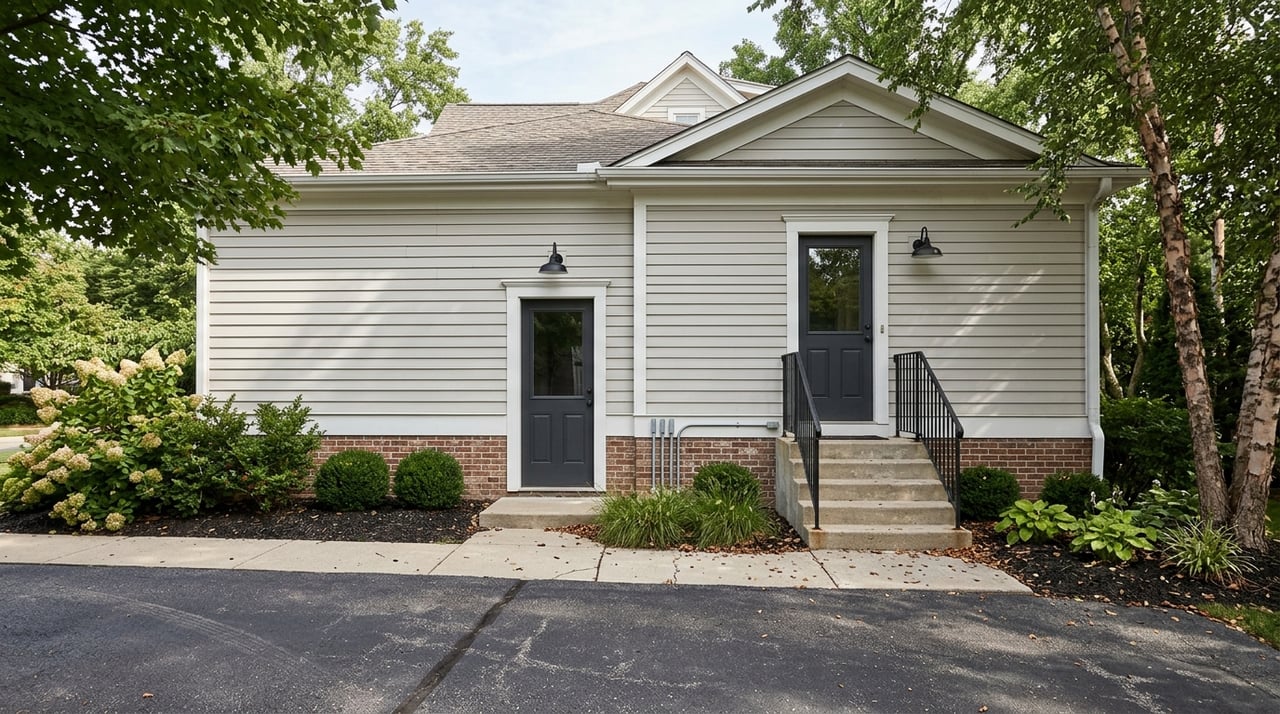
If you have looked at Waltham home prices and wondered how buyers make the numbers work, house hacking may be worth a closer look. The basic idea is simple: you live in one unit and rent out the others to help offset your housing costs. In a city with high rents, a large share of multifamily housing, and strong regional demand, that strategy can be especially relevant. Let’s dive in.
Why Waltham Fits House Hacking
Waltham has several traits that make small multifamily ownership worth exploring. According to the latest U.S. Census QuickFacts for Waltham, the city has a 49.7% owner-occupied housing rate and a median gross rent of $2,268. The same source reports median household income of $120,216 and a mean travel time to work of 24.7 minutes.
Those numbers matter because house hacking usually works best where rental demand is established and where carrying costs can be partially offset by rental income. Waltham also has a housing stock that supports this conversation. A Waltham Public Library planning document using 2021 Census data reported that 55.5% of residential structures had two or more units, which shows that small multifamily properties are part of the local landscape, not a rare exception.
What House Hacking Means
House hacking usually means buying a property with more than one unit, living in one unit as your primary residence, and renting the other unit or units. For many buyers, this can be a duplex, a two-family home, or a small 2-4 unit building.
In Greater Boston, another common version is a converted single-family property. The Metropolitan Area Planning Council describes a single-family home conversion as a single-family house converted into two or more apartments with few or no exterior changes. That definition can help you identify properties that may look like single-family homes from the street but function differently inside.
Common Small Multifamily Options
If you are searching in Waltham, these are the most practical property types to watch for:
Two-family homes
A two-family or duplex is often the most approachable entry point. You live in one unit and rent the other, which can make management more straightforward than taking on a larger building.
Converted homes
Some homes were originally built as single-family residences and later divided into multiple apartments. These can offer charm and flexible layouts, but they also require careful review of legal use, permits, and condition.
Small 2-4 unit buildings
A 3-unit or 4-unit property can create more rental income potential, but it also adds complexity. You may have more maintenance, more systems to review, and stricter underwriting requirements depending on the loan program.
Zoning Matters More Than You Think
One of the biggest mistakes buyers make is assuming that if a property looks like a duplex or multifamily, it is automatically legal as one. In Waltham, use and feasibility are parcel-specific.
The city’s zoning ordinance use table separates single-family detached, two-family detached, accessory dwelling units, and multifamily dwelling uses. In that table, two-family detached is permitted by right in RB, RC, and RD districts. Multifamily dwelling is permitted in RC, RD, HR1, HR2, BA, BB, and BC districts, often with Y or Y1 treatment.
That does not mean every existing building is ready for your plan without further review. You still need to confirm the zoning district, current legal use, and whether the property has any nonconforming or special-permit status.
How To Check A Property In Waltham
Waltham gives buyers useful public tools for early research. The city’s GIS Maps Online platform includes property records, zoning information, environmental layers, aerial photography, and MBTA Commuter Rail and bus stop layers.
For a more targeted review, the city’s Map Cabinet and MapGeo resources can help you look at zoning maps, parcel data, and property records. These tools are a smart first step when you are comparing locations, transit access, lot details, and possible red flags.
Financing Basics For Owner-Occupants
One reason house hacking appeals to first-time and early move-up buyers is that owner-occupied small multifamily financing is often different from financing for a pure investment property. If you plan to live in the property, you may have access to programs designed for owner-occupants.
HUD states in its FHA handbook that at least one borrower must occupy the property within 60 days of signing the security instrument and intend to continue occupancy for at least one year. HUD’s 2025 Programs of HUD summary also says FHA one- to four-family properties are eligible and require a minimum 3.5% cash investment based on the lesser of the sales price or appraised value.
That does not mean every buyer or every property will qualify. It does mean a 2-4 unit purchase may be more realistic than many buyers assume, provided the property, your finances, and the loan program align.
MassHousing Options In Massachusetts
MassHousing is another important resource for Massachusetts buyers. On its homebuyer page, MassHousing says eligible borrowers can purchase a single-family home, condo, or 2-4 family property, subject to income limits.
MassHousing also notes that borrowers must owner-occupy the property, may not own other residential real estate at closing, and must complete homebuyer counseling. For 2-4 family purchase transactions, landlord counseling is required. If you are considering your first multifamily purchase, those requirements are worth understanding early.
Local Costs To Run Before You Buy
House hacking is not just about the mortgage payment. In Waltham, several local cost factors can change the math.
Property taxes
Waltham’s FY2026 residential tax rate is $10.32 per $1,000 of assessed value. This is one of the core line items you should include when comparing properties.
Residential exemption
For owner-occupied residential properties up to a three-family, Waltham’s residential exemption reduced assessed value by $317,643 in FY2026, according to the same city source. For eligible owner-occupants, that can materially affect carrying costs.
Repairs and compliance
A lower purchase price does not always mean a lower total cost. Deferred maintenance, system upgrades, code work, and unit turnover expenses can add up quickly in older multifamily properties.
Due Diligence Items That Matter In Waltham
Before you commit to a small multifamily property, it helps to focus on the local checks that can affect cost, timing, and legal use.
Housing and code compliance
Waltham’s Housing Services page says dwellings must comply with the Massachusetts State Sanitary Code. City inspectors review kitchens and baths, hot water, heating, plumbing and electrical systems, smoke detectors, locks, exits, and structural conditions.
The city also notes that the Fire Department performs smoke-detector inspections for property sales and inspects buildings with permits before a certificate of occupancy is issued. If a property has older systems or questionable unit layouts, these checks matter.
Renovation permits
If your strategy depends on updates, layout changes, or future improvements, start early with the Waltham Building Department. The city states that permit applications require property-owner signatures, and applications submitted after July 1, 2025 must comply with the 10th Edition of the Massachusetts Building Code.
That is especially important if you are buying a property with an unfinished basement, past alterations, or plans to rework kitchens, baths, or egress.
Wetlands and flood screening
Some properties need another layer of review. Waltham’s wetlands mapping tool is a screening resource that approximates FEMA flood zones, a 100-foot wetland buffer, and 200-foot riverfront areas.
The city is clear that exact limits must be field-verified when a filing is required. For buyers, that means a map check is useful, but it is not the final word.
Lead paint risks
If you are considering an older property, lead should be part of your due diligence list. Massachusetts states that pre-1978 homes may contain lead-based paint, and rental units where a child under 6 resides must have lead hazards removed or covered.
This can affect renovation planning, rental readiness, and long-term ownership costs. It is one of the most important early questions for older multifamily housing.
A Practical Way To Evaluate A House Hack
If you are serious about buying a small multifamily in Waltham, keep your review process simple and disciplined.
Start with these questions
- Is the current use consistent with zoning and property records?
- Will you occupy one unit as your primary residence?
- What loan program fits your budget and timeline?
- What are the taxes, and does the residential exemption apply?
- Are there code, lead, permit, or environmental issues to review?
- How close is the property to daily needs and transit options?
Then compare the full picture
Do not focus only on list price and projected rent. Also review condition, layout, code compliance, tax treatment, and the amount of work needed after closing.
In Waltham, transit access and location analysis often matter as much as the building itself. The city’s mapping tools make that easier to evaluate on a property-by-property basis.
The Bottom Line
House hacking in Waltham can be a smart path if you want to build equity while offsetting some of your monthly housing costs. The city has the kind of housing stock, rent profile, and zoning complexity that makes small multifamily ownership both promising and detail-driven.
The key is to treat each property as its own case. Legal use, financing, taxes, code compliance, and local map review all matter. If you want help sorting through Waltham multifamily options and building a clearer buying strategy, connect with Mike Reece for practical, local guidance.
FAQs
Can you live in one unit and rent the others in a Waltham multifamily property?
- Yes, that is the basic house-hacking model, but you should verify zoning, legal use, and owner-occupancy rules for the property and loan program.
What property types work best for house hacking in Waltham?
- Common options include two-family homes, converted single-family homes with multiple apartments, and small 2-4 unit buildings.
How do you check zoning for a Waltham duplex or multifamily home?
- You can start with Waltham’s Map Cabinet, MapGeo, and GIS tools, then confirm details through the city’s zoning ordinance and relevant departments.
What financing options are available for a Waltham house hack?
- FHA allows eligible owner-occupied 1-4 family properties, and MassHousing may also be an option for qualified Massachusetts buyers purchasing 2-4 family homes.
What local costs should you budget for when buying a small multifamily in Waltham?
- Key items include property taxes, possible residential exemption savings, repairs, code compliance, permit-related work, and any lead or environmental issues.
Why does lead paint matter in older Waltham multifamily homes?
- Many pre-1978 homes may contain lead-based paint, and Massachusetts lead law can affect rental use, renovation planning, and compliance costs.